


Search results for: 2026
ICOMIA, EBI and NMMA Launch Global Industry Survey to Shape the Future of Boat Life Cycle Assessment
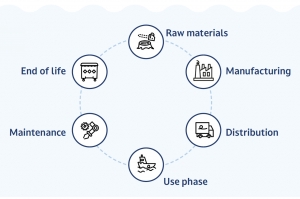
The International Council of Marine Industry Associations (ICOMIA), the European Boating Industry (EBI) and the National Marine Manufacturers Association (NMMA) have launched a global industry questionnaire to assess the recreational marine sector's readiness to adopt a harmonised Life Cycle Assessment (LCA) methodology.
The survey forms a key part of the organisations' joint initiative to develop the first globally aligned environmental assessment framework for recreational boats launched last year. The project aims to establish a consistent, science-based approach that can be used internationally to measure and communicate the environmental impacts of recreational craft across their lifecycle. The initiative builds on the Blue Boat Horizon (BBH) project https://europeanboatingindustry.eu/eu-affairs/lca-blue-boat-horizon led by EBI that developed an industry-first LCA methodology and now work towards global alignment with a methodology that is both robust and practical for adoption by boatbuilders up to 24m.
As stakeholder demands, eco-design and environmental reporting requirements continue to evolve, boatbuilders, suppliers and industry stakeholders are increasingly seeking reliable tools to understand, measure and improve environmental performance. A globally harmonised methodology will support greater comparability, transparency and credibility while helping businesses prepare for future market and regulatory expectations.
The questionnaire has been designed to gather insights from boatbuilders and the supply chain around the world on their current understanding and use of Life Cycle Assessment, the resources available within their organisations, perceived challenges to implementation, and the support they would need to adopt a harmonised methodology successfully.
"The success of this project depends on broad industry participation," said Joe Lynch ICOMIA CEO. "We want to ensure that our collaboration and the methodology reflect the realities of boatbuilders operating in different markets, building different types of craft, and working at different levels of sustainability maturity. The feedback gathered through this questionnaire will help shape a practical solution that delivers value for the entire global recreational marine industry."
The information collected will help the project partners:
- Understand the industry's current level of LCA awareness and experience
- Identify barriers to adoption
- Identify current and forthcoming legislation
- Assess training and support requirements
- Guide the development of user-friendly tools and resources
- Ensure global relevance across different markets and boat categories
- Support the creation of a credible and internationally accepted methodology
The project ultimately aims to provide the recreational marine sector with a common framework that enables informed environmental decision-making, supports sustainable boat building continuous improvement, and facilitates credible environmental communication across global markets.
The questionnaire also serves as a gateway for companies wishing to play a more active role in the project. Boatbuilders that participate in the survey may have the opportunity to join a pilot group that will test the new trial LCA tool, based on BBH Version 1.1, currently being developed by ICOMIA, EBI and NMMA. Planned trials from October to December 2026 will allow participating companies to gain first-hand experience of the methodology, learn about LCA first-hand, contribute feedback on usability and functionality, and help shape a tool designed for practical adoption across the global recreational marine industry.
Have Your Say
ICOMIA, EBI and NMMA encourage all boatbuilders to participate in the survey and contribute to shaping the future environmental framework for the recreational boating industry.
Survey link: https://www.surveymonkey.com/r/CG9S2J6
Survey closing date: Friday 23 October 2026
Companies wishing to be more involved should contact their respective association, NMMA for North America, EBI for Europe and ICOMIA for other regions.
Patrick Hemp Technical Director ICOMIA This email address is being protected from spambots. You need JavaScript enabled to view it.
Philip Easthill, Secretary-General EBI This email address is being protected from spambots. You need JavaScript enabled to view it.
Jeff Wasil, Vice President Environmental Compliance & Marine Technology NMMA This email address is being protected from spambots. You need JavaScript enabled to view it.
EBI launches EUDR guidance as first publication of new Regulatory Compass
 European Boating Industry (EBI) launches dedicated guidance on the EU Deforestation Regulation (EUDR), the first publication under its new EBI Regulatory Compass initiative providing practical EU regulatory support to the recreational boating industry.
This marks the start of the EBI Regulatory Compass, a new initiative developed as part of EBI’s strategy to provide more concrete support to companies alongside its policy and advocacy work. As EU legislation increasingly affects day-to-day business activities, the Regulatory Compass will provide sector-specific guidance and practical implementation support on regulatory requirements relevant to the recreational boating industry.
The EUDR introduces new due diligence, traceability and documentation requirements for companies placing, making available or exporting certain commodities and products on the EU market. For the boating industry, it is particularly relevant because wood and natural rubber are widely used across boatbuilding, refit and components.
The Regulation will apply from 30 December 2026 for large and medium-sized enterprises and from 30 June 2027 for micro and small enterprises. Depending on their role in the supply chain, companies may need to determine whether products fall within scope, obtain information from suppliers, meet traceability and geolocation requirements, carry out due diligence and risk assessments, submit due diligence statements and retain the required documentation.
To support companies preparing these requirements, EBI has developed the new guidance together with Cattwyk. It focuses specifically on how the EUDR applies to the recreational boating industry and translates the Regulation into practical information for businesses across the supply chain.
The guidance addresses the distinction between operators, downstream operators and traders and the obligations applying to each. It covers importers, component manufacturers and distributors, boatbuilders, refit yards and exporters, as well as typical sector examples including teak decking, marine plywood, wooden furniture and joinery, natural-rubber components and finished recreational craft.
It also provides practical information on due diligence, supplier information, traceability and geolocation, customs requirements, documentation and record keeping, together with a checklist of actions companies can take to prepare for compliance.
Future publications will focus on specific areas of EU legislation and, where relevant, will be developed together with technical specialists. The aim is to help companies understand not only what EU legislation requires, but how those requirements apply in practice across the recreational boating value chain.
EBI Regulatory Compass publications are available as in-depth paid resources. Preferential pricing is available to EBI members and to companies and organisations belonging to EBI’s national member associations.
The EUDR Guidance is available now through the EBI website, with further EBI Regulatory Compass publications to follow.
EBI expands membership and shapes future priorities at 2026 General Assembly in Istanbul
EBI expands membership and shapes future priorities at 2026 General Assembly in Istanbul
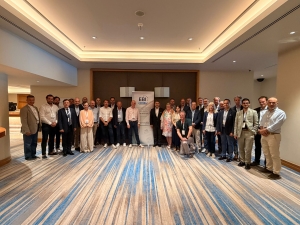
EBI successfully concluded its 2026 General Assembly in Istanbul, hosted by YATED, the Yacht and Boat Industry Association of Türkiye. The meeting brought together members from across Europe's recreational boating sector to review progress, welcome new members, and define priorities for the years ahead.
A major milestone of this year's General Assembly was the continued growth of EBI's membership. EBI welcomed Green Sail from Croatia as a new Sustaining Member, further strengthening the organisation's expertise and network in sustainability and innovation. Green Sai is a leading sustainability initiative focused on promoting environmentally responsible practices in nautical tourism and boating. The organisation works with marinas, charter companies and tourism operators to develop practical sustainability solutions, deliver training and education programmes, and raise awareness of marine conservation. With this addition, EBI now brings together 33 members across Europe, reinforcing its position as the leading representative body for the recreational boating industry at European level.
Ornela Krezic, Green Sail Manager comments: “We are excited to join EBI and to contribute to a network that is shaping the future of recreational boating in Europe. Over the years, we have seen how collaboration can drive meaningful change, and we are proud to join an organisation that brings together so many dedicated stakeholders from across Europe. We look forward to contributing to EBI’s mission and helping strengthen sustainability within the recreational boating sector.”
The General Assembly featured workshop sessions which focused on the development of a European-wide approach to boater demographics studies and on best practices in advocacy. Members exchanged experiences and explored opportunities for greater collaboration to strengthen market intelligence, support evidence-based policymaking, and enhance the boating sector's representation at national and European levels.
Participants also visited Aiata Shipyard and Sirena Shipyard, gaining valuable insight into Türkiye's internationally recognised boatbuilding industry and its contribution to innovation, craftsmanship and export growth within the European recreational boating sector. A dedicated session on YATED and the Turkish market also further helped participants gain insight into the development of an exciting market.
Robert Marx, President of European Boating Industry, said: "The continued growth of our membership demonstrates the increasing importance of a strong and united voice for the recreational boating industry in Europe. We are delighted to welcome Green Sail as new sustaining member. By bringing together associations, companies and partners from across the continent, EBI is strengthening its ability to advocate for policies that support competitiveness, innovation and sustainable growth. We were delighted to hold this year's General Assembly in Türkiye, a country that plays an increasingly important role in European boatbuilding, manufacturing excellence and international trade. We sincerely thank YATED for their hospitality and warm welcome to Türkiye."
Murat Bekiroğlu, President of YATED, added: “It was a great pleasure and privilege for YATED (Turkish Yacht and Boat Industry Association) to host the EBI General Assembly in our historic city of Istanbul, which bridges Europe and Asia and has long served as a cultural link between civilizations. We were truly delighted to welcome the esteemed EBI family in Türkiye. The fact that this important meeting held in our country was extremely valuable for us in showcasing the strength and potential of our industry on the international stage.”
Internautica event highlights the value of stronger industry representation
At Internautica 2026 in Marina Portorož, the Slovenian Marine Industry Associaton (SMIA) organised the round table “The Power of Association: Stronger Together in European Boating”, focused on the value of structured representation, cooperation and a shared industry voice at national and European level. The event took place on Friday 22 May and brought together speakers from Slovenia, Croatia, Italy, Norway and the European level.
The format was built around a series of presentations and exchanges on why association work matters for the sector, particularly on internationalisation, policy dialogue with EU institutions, the green transition and regulation, and workforce development. From EBI, Ana Čalić, EBI Council Member, and Álvaro Urdiales, EBI Project & Policy Officer, presented the European perspective and the role of coordinated industry action in shaping the policy framework for boating and nautical tourism. The programme also included contributions from Roberto Perocchio for Assomarinas, Renata B. Marević for the Croatian Chamber of Commerce’s Nautical Tourism Association, Reidar Gjolstad for Norboat, and Jurij Korenc for IFBSO and Internautica.
The event reflected SMIA’s efforts to strengthen its role and visibility, with Matjaž Murko and Fiorenzo Lupieri leading the host introduction on SMIA’s achievements and strategic direction. It provided a useful opportunity to underline the importance of national associations working together through EBI to increase influence, improve coordination and ensure that the sector speaks with a stronger voice in Europe. EBI thanks SMIA, Matjaž Murko and Fiorenzo Lupieri for the organisation and warm welcome, and Internautica for providing an excellent setting for the discussion.
EBI participates in ICOMIA/IFBSO Congress in Washington, D.C.
EBI participated in the ICOMIA/IFBSO Congress in Washington, D.C., joining marine industry associations, boat show organisers, and stakeholders from around the world for several days of meetings, exchanges and networking.
The Congress also marked an important milestone for ICOMIA, which celebrates its 60th anniversary in 2026. EBI congratulates ICOMIA on six decades of service to the global recreational boating industry and on its long-standing role in supporting international cooperation, advocacy and knowledge exchange. EBI also underlines the strong partnership between ICOMIA and EBI, which remains essential in connecting European priorities with global industry discussions.
EBI was represented by President Robert Marx and Secretary-General Philip Easthill, alongside several EBI members participating in the Congress. Discussions took place across committee meetings, sessions on sustainability and wider exchanges on the challenges and opportunities facing the recreational boating sector. The event provided an important opportunity to further strengthen cooperation between the European and global level and to advance common priorities for the sector.
EBI thanks the National Marine Manufacturers Association (NMMA) for hosting an excellent Congress, and in particular Frank Hugelmeyer, Joe Lynch, Niels Klarenbeek, Veda Pretorius and their teams for their work in bringing the international industry together in Washington, D.C.
During the visit, a delegation of EBI and its members also met with the European Union Delegation to the United States. The exchange focused on the importance of a stable and reliable EU–US trade relationship, as well as the need to strengthen regulatory cooperation in support of the competitiveness and long-term success of the European recreational boating industry.
EBI joins RCD Expert Group discusses evaluation of Recreational Craft Directive
The RCD Expert Group met on 21 May to discuss the evaluation of the Recreational Craft Directive and a number of regulatory updates crucial for the industry. The meeting brought together Member State authorities, the EU Commission and stakeholders, including EBI.
The evaluation carried out by CSES and Emisia confirms that the RCD remains a central EU framework for the recreational boating sector and continues to deliver clear added value for the Single Market. It found that the Directive has supported the free movement of recreational craft across the EU, while also contributing to environmental benefits through tighter emissions requirements. The market analysis presented at the meeting also showed positive developments for the sector, with stable company numbers, employment growth over the evaluation period, increased production value and quantity, and the EU remaining a net exporter of recreational craft.
At the same time, the evaluation identified several areas where the framework is coming under pressure from technological, market and policy developments. These include definitions and provisions linked to major craft conversion, new propulsion technologies, foiling and other innovations, as well as the need to address newer issues such as alternative propulsion systems, decarbonisation, circularity, end-of-life recycling and life-cycle assessment.
Market surveillance was also highlighted as an area of concern, in particular due to limited resources, uneven checks and challenges linked to imported products and online sales. The future European Product Act, expected in the third quarter of 2026, could bring significant changes to the EU product framework, including on CE marking, notified bodies, digital product passports, conformity assessment, circular business models and market surveillance. It will implement changes to the New Legislative Framework, Market Surveillance Regulation and Standardisation Regulation.
The meeting also addressed the AI Act, which includes the RCD in its scope for high-risk applications where safety-related software is concerned. Application is likely to be delayed until August 2028, but the Commission is already consulting on draft guidelines for the classification of high-risk AI systems. EBI will assess whether sector-specific guidance for the recreational boating industry may be useful.
Several practical points linked to the RCD Application Guide were also discussed. These included noise requirements for electric engines, conversion of watercraft to electric propulsion, the treatment of kayaks and canoes, watercraft and engines built for own use, the definition of personal watercraft, and the principles for major craft conversion.
EBI will continue to follow the RCD evaluation and related files closely through its RCD Taskforce and direct engagement with the EU Commission. The next steps will be particularly important as the RCD revision, the European Product Act and wider updates to the EU product framework develop in parallel. Members are encouraged to provide input to the EBI Secretariat and a more detailed summary and related documents can be provided.
EU and US move closer to implementation of tariff agreement
The European Parliament and the Council of the EU reached an agreement on the legislation implementing the EU’s tariff commitments under the EU-US agreement from July and August 2025. The agreement is an important step towards providing greater stability and predictability in transatlantic trade relations for the recreational boating industry.
Under the agreement, EU tariffs on industrial goods imported from the US, including recreational boats and most products relevant to the boating sector, will be reduced to 0%. In parallel, the arrangement provides the long-awaited framework for EU exporters’ access to the US market under the agreed 15% all-inclusive tariff ceiling.
Several changes were negotiated during the legislative process to strengthen safeguards for the European industry. The main regulation will include a sunset clause, meaning that the EU’s 0% tariff rate will automatically expire on 31 December 2029 unless it is actively renewed. Before any extension, the European Commission will assess the impact of the measures on EU industry, SMEs and trade patterns with third countries. The agreement also addresses concerns linked to steel and aluminium derivatives. In 2025, the US added more than 400 product categories to the list of derivative steel and aluminium products subject to additional tariffs, including several components and products relevant for the boating sector. Under the agreed text, the EU Commission will be able to suspend tariff preferences by 31 December 2026 if the US continues to apply tariff rates above 15% on EU steel and aluminium derivative products.
In addition, the legislation includes a strengthened suspension clause, allowing the Commission to suspend tariff preferences if the US fails to address EU concerns regarding the treatment of exports that should benefit from the 15% all-inclusive ceiling. A safeguard mechanism will also allow the Commission to investigate and react if tariff preferences granted to the US lead to increases in imports that threaten to negatively affect EU industry. The Commission will also report quarterly on changes in trade volumes and values for US exports covered by the agreement.
From the perspective of European exporters, the provisional agreement is welcome as it provides an important degree of stability and certainty. The additional safeguards should also give the EU stronger tools to protect industry interests where needed. Particularly important for the boating sector is the added pressure on the US to lower tariffs on steel and aluminium derivative products to the agreed 15% rate, as higher tariffs continue to create concerns for manufacturers of components and products with significant steel and aluminium content.
EBI will continue to monitor the next steps in the process, including formal approval of the legislation, and will remain in close contact with the EU Commission to protect the interests of the recreational boating industry. Members are encouraged to share updates on the situation of their exporting companies with the EBI Secretariat, so that sector concerns can continue to be raised at EU level.
European Boating Industry launches roadmap for alternative fuel infrastructure in marinas
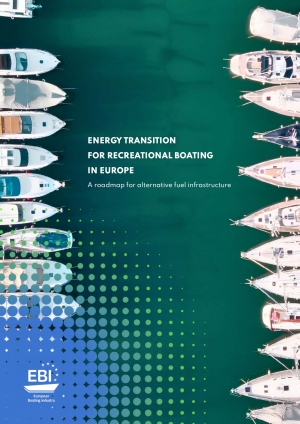
European Boating Industry (EBI) has launched its new roadmap, “Energy Transition for Recreational Boating in Europe: A roadmap for alternative fuel infrastructure”, setting out practical industry and policy recommendations to support the decarbonisation of recreational boating and the development of marina infrastructure across Europe.
The roadmap highlights the need for a technology-neutral and multi-pathway approach to the energy transition, recognising the diversity of Europe’s recreational boating fleet of more than 6.5 million vessels and the operational realities of marinas across coastal and inland waters.
While recreational boating accounts for approximately 0.4% of EU transport greenhouse gas emissions, the sector is proactively contributing to Europe’s climate objectives and preparing for the transition towards sustainable propulsion solutions.
The roadmap identifies marinas as central enablers of the transition and calls for coordinated action between industry, marina operators, EU institutions, national authorities, and regional stakeholders. It highlights the importance of ensuring infrastructure readiness keeps pace with rapidly evolving propulsion technologies.
Philip Easthill, Secretary-General of European Boating Industry, said: “The recreational boating sector is committed to contributing to Europe’s energy transition. Our roadmap shows that the solutions are being developed and a multi-pathway approach is the way forward. Europe’s diverse boating ecosystem requires a pragmatic and technology-neutral approach supported by the right infrastructure, investment, and regulatory framework.
We look forward to presenting the Roadmap to the EU institutions and cooperating with all players to make progress in the coming years to support sustainability and competitiveness of the sector.”
The roadmap highlights the immediate potential of sustainable drop-in fuels such as Hydrotreated Vegetable Oil (HVO), which can already be used in most existing diesel engines without requiring significant modifications or new infrastructure. HVO can reduce lifecycle CO₂ emissions by up to 90% compared to fossil diesel while also reducing particulate and NOx emissions.
At the same time, electric propulsion and hybrid systems are expanding rapidly, particularly for smaller boats and inland waterways, while future opportunities linked to hydrogen and methanol continue to be explored for larger vessels.
The roadmap aligns with the objectives of the EU Sustainable Transport Investment Plan (STIP) and the Industrial Maritime Strategy, which highlighted the position of recreational boating and marina infrastructure within Europe’s broader transport and maritime policy framework. The STIP acknowledged the unique challenges and innovation potential in adopting clean propulsion, electrification, and a wide scope of renewable fuels for the sector’s decarbonisation pathway.
EBI calls for targeted support measures, investment tools, and innovation funding to help marinas and the recreational boating sector contribute to Europe’s decarbonisation and competitiveness objectives.
The publication also stresses the economic realities facing Europe’s estimated 10–20,000 marinas, many of which are SMEs or municipally operated facilities with limited capacity for major infrastructure investments.
The roadmap is available here.
EBI co-hosts Second Stakeholder Meeting on End-of-Life Boats and Composites
On 9 April 2026, EBI, together with the European Commission (DG MARE), co-organised the second meeting of the Network of Stakeholders on End-of-Life Recreational Boats and Composites, bringing together policymakers, industry, and recycling experts.
Discussions focused on practical solutions and policy needs ahead of the upcoming Circular Economy Act. A key message emerged: the challenge is not technological, but systemic. While recycling technologies for composites exist, barriers such as fragmented national approaches, limited volumes, and regulatory complexities continue to hinder large-scale implementation.
Stakeholders highlighted the need for a more coordinated EU approach, improved financing mechanisms, and stronger cross-sector collaboration to achieve scale. The meeting concluded with broad alignment and a shared commitment to contribute to the development of an effective EU framework for end-of-life boats and composite recycling.
 English
 Български
 Hrvatski
 Čeština
 Dansk
Dansk Nederlands
 Eesti
Eesti Suomi
Suomi Français
 Deutsch
 Ελληνικά
 Magyar
 Gaelige
 Italiano
 Latviešu valoda
 Lietuvių kalba
 Maltese
 Norsk bokmål
 Polski
 Português
 Română
 Русский
 Slovenščina
 Español
 Svenska
Members' area
Newsletter subscription
You can subscribe to the European Boating Industry newsletter here.